CRM Data Quality Checklist for Service Businesses
Use a CRM data quality checklist to find duplicates, missing owners, inconsistent stages, stale opportunities, and unreliable fields before trusting reports.
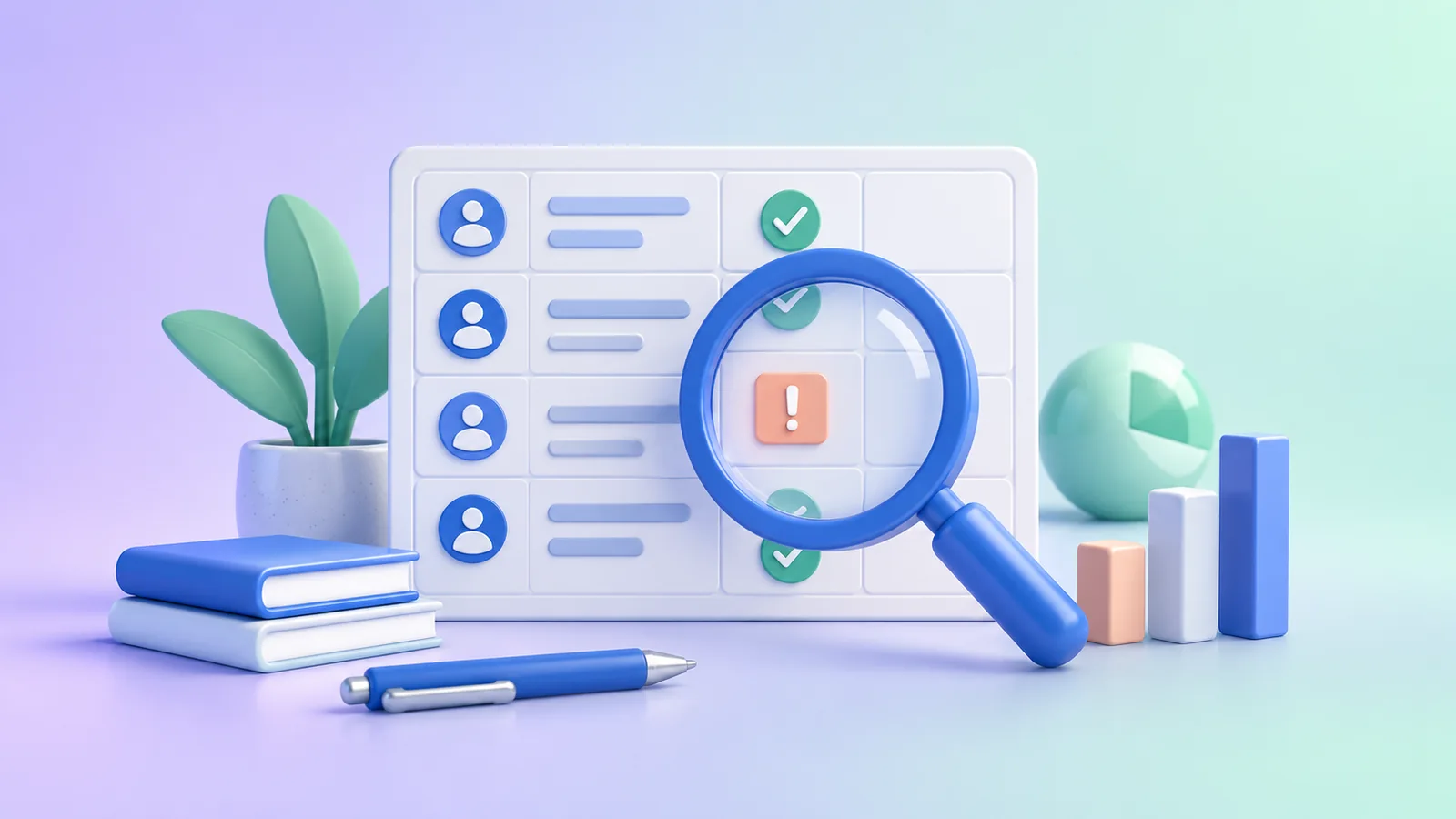
A CRM data quality checklist helps the team determine whether its operating records can support reliable decisions. A dashboard can be mathematically correct and still misleading when duplicate contacts, inconsistent stages, or missing ownership distort the inputs. Check the records before interpreting the trend.
Start with fields that drive decisions
Prioritize the fields used for assignment, follow-up, reporting, and automation. A missing optional note is different from an opportunity without an owner. Identify which actions depend on each field and what failure an incorrect value would cause.
Audit six common problems
| Check | Example failure |
|---|---|
| Identity | The same person appears as several contacts |
| Ownership | Active opportunity has no responsible owner |
| Stage | Team uses the same stage for different conditions |
| Dates | Close date passes without an updated decision |
| Status | Closed or inactive work remains in active reports |
| Source | Attribution field is overwritten by a later visit |
Sample records across owners, sources, and stages. Looking only at the cleanest accounts can hide systematic issues.
Correct the process behind the error
In an illustrative CRM, many opportunities lack a next action because the team can advance them without specifying one. Cleaning the current records helps, but the issue will return unless stage advancement and ownership expectations change.
Add validation where it supports a real workflow. Avoid making every field mandatory; excessive requirements encourage placeholder values that appear complete while conveying little information.
Merge carefully and preserve useful history
Review identity evidence before combining records. Two people sharing a company name are not duplicates. Preserve relevant activity, relationships, and source information according to your system’s merge behavior. Test the procedure on a controlled sample before bulk cleanup.
Monitor quality alongside performance
Track the share of active records missing critical fields, duplicate candidates awaiting review, and opportunities whose next action is overdue. Assign an owner to each issue class. A periodic cleanup without ongoing responsibility becomes a recurring emergency.
Frequently asked questions
How often should a CRM audit run?
Use a cadence appropriate to record volume and change. Check critical exceptions frequently, and perform broader reviews after imports, workflow changes, or major team transitions.
Should incomplete records be deleted?
Not automatically. Determine their purpose, relationship, retention requirements, and available evidence. Archive, enrich, merge, or remove records through a deliberate authorized process.
Put this into practice
Sample twenty active opportunities and twenty contacts. Record critical quality failures, repair the affected workflow, and assign a recurring owner to the highest-consequence exception report.
For the wider operating context, start with Educo’s service business approach. To discuss the constraint in your own business, talk to Educo.